
Image
website-and-mobile-app-development-process

Every successful digital product begins with an idea. However, transforming that idea into a successful website, mobile application, or business platform requires much more than coding and design.

A structured development process helps businesses reduce risks, improve quality, and create digital solutions that deliver real value to users and organizations.

1. Understanding the Idea and Gathering Requirements

Every successful project starts with understanding business goals and user needs.

This phase includes:

  • Business analysis
  • Market research
  • Competitor analysis
  • Defining project objectives
  • Identifying required features

Clear requirements establish a strong foundation for the entire project.

2. Planning and User Experience Design

Before development begins, teams create a roadmap for how the system will function.

This stage includes:

  • User journey mapping
  • Wireframing
  • Information architecture
  • User Experience (UX) planning

The goal is to ensure users can interact with the platform easily and efficiently.

3. User Interface (UI) Design

Professional design plays a critical role in shaping first impressions.

UI design focuses on:

  • Visual identity
  • Ease of use
  • Consistency across screens
  • Responsive design for all devices

A well-designed interface improves engagement and increases conversion rates.

4. Software Development

Once designs are approved, the development phase begins.

This may include:

  • Website development
  • Android application development
  • iOS application development
  • Backend systems
  • Database architecture
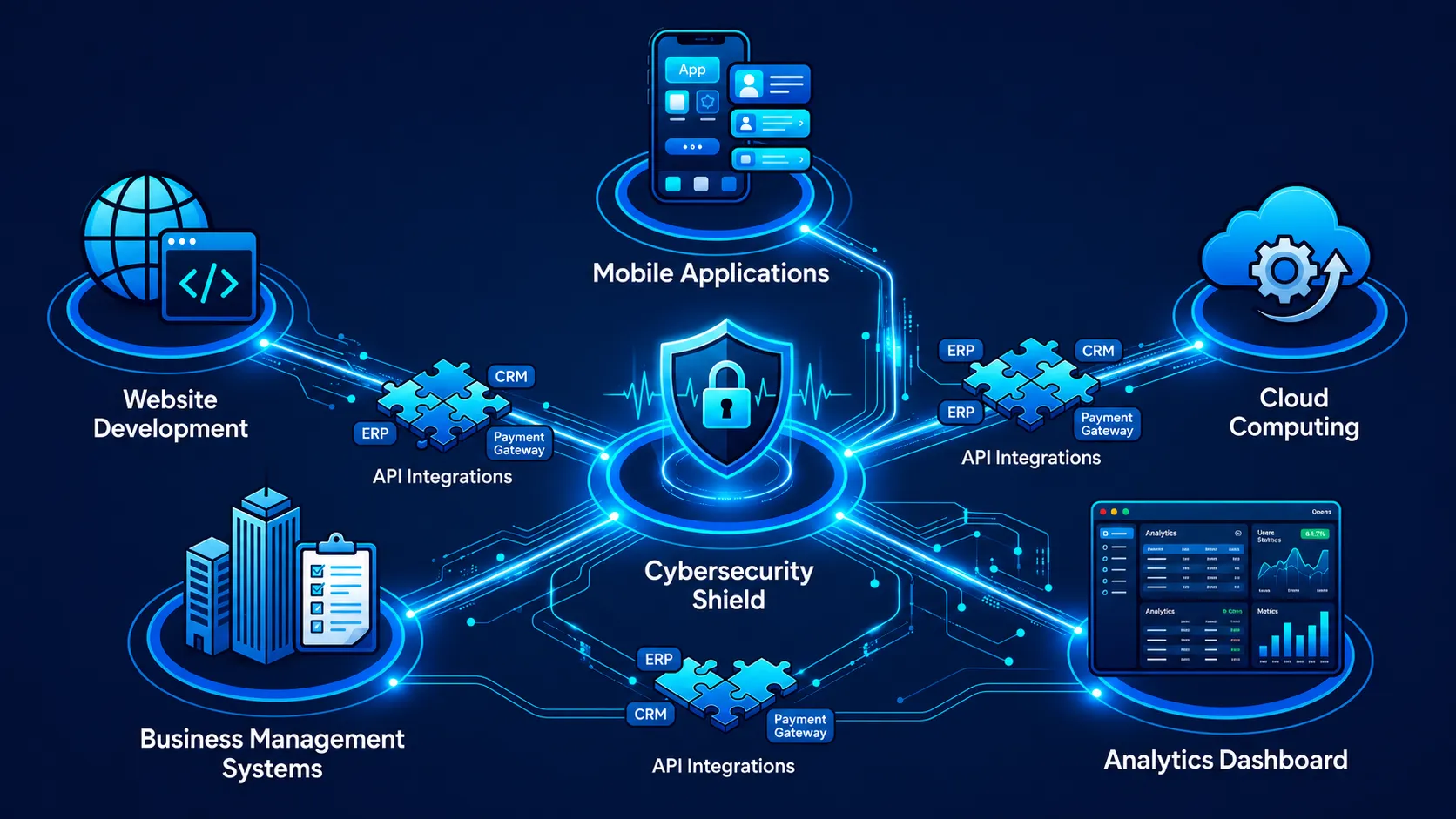
  • API integrations

During this stage, concepts and designs are transformed into a fully functional digital solution.

5. Testing and Quality Assurance

No successful product should be launched without comprehensive testing.

Quality assurance includes:

  • Performance testing
  • Security testing
  • User experience testing
  • Cross-device compatibility testing
  • Functional testing

Testing ensures the system performs reliably before reaching end users.

6. Deployment and Launch

After testing is completed, the platform is prepared for production.

This phase includes:

  • Hosting configuration
  • Server deployment
  • Domain and email setup
  • Data migration
  • Performance monitoring

A successful launch ensures a smooth user experience from day one.

7. Continuous Improvement and Support

Launching a website or application is only the beginning.

Successful digital products require:

  • Regular updates
  • Performance optimization
  • New feature development
  • User feedback implementation
  • Ongoing security enhancements

Continuous improvement helps businesses remain competitive and meet changing customer expectations.

Common Mistakes That Cause Digital Projects to Fail

Many projects face challenges due to avoidable mistakes, such as:

  • Starting development without proper planning
  • Ignoring user needs
  • Focusing only on design
  • Skipping testing phases
  • Lacking a long-term roadmap

Avoiding these issues significantly increases project success rates.

How Azad Digital Helps Businesses Build Successful Digital Products

At Azad Digital, we follow a complete development methodology that covers business analysis, planning, UI/UX design, software development, testing, deployment, and ongoing support.

Our team helps organizations transform ideas into professional websites, mobile applications, and business systems that support growth and digital transformation.

Conclusion

Successful websites and mobile applications are not created by chance. They are built through careful planning, professional execution, and continuous improvement.

By following a structured development process and partnering with an experienced software development company, businesses can turn ideas into powerful digital solutions that create lasting value.


Related Blogs
Image
website-and-mobile-app-development-process
24
Jun

Every successful digital product begins with an idea. However, transforming that idea into a successful website, mobile application, or business platform requires much more than coding and design.

A structured development process helps businesses reduce risks, improve quality, and create digital solutions that deliver real value to users and organizations.

1. Understanding the Idea and Gathering Requirements

Every successful project starts with understanding business goals and user needs.

This phase includes:

  • Business analysis
  • Market research
  • Competitor analysis
  • Defining project objectives
  • Identifying required features

Clear requirements establish a strong foundation for the entire project.

2. Planning and User Experience Design

Before development begins, teams create a roadmap for how the system will function.

This stage includes:

  • User journey mapping
  • Wireframing
  • Information architecture
  • User Experience (UX) planning

The goal is to ensure users can interact with the platform easily and efficiently.

3. User Interface (UI) Design

Professional design plays a critical role in shaping first impressions.

UI design focuses on:

  • Visual identity
  • Ease of use
  • Consistency across screens
  • Responsive design for all devices

A well-designed interface improves engagement and increases conversion rates.

4. Software Development

Once designs are approved, the development phase begins.

This may include:

  • Website development
  • Android application development
  • iOS application development
  • Backend systems
  • Database architecture
  • API integrations

During this stage, concepts and designs are transformed into a fully functional digital solution.

5. Testing and Quality Assurance

No successful product should be launched without comprehensive testing.

Quality assurance includes:

  • Performance testing
  • Security testing
  • User experience testing
  • Cross-device compatibility testing
  • Functional testing

Testing ensures the system performs reliably before reaching end users.

6. Deployment and Launch

After testing is completed, the platform is prepared for production.

This phase includes:

  • Hosting configuration
  • Server deployment
  • Domain and email setup
  • Data migration
  • Performance monitoring

A successful launch ensures a smooth user experience from day one.

7. Continuous Improvement and Support

Launching a website or application is only the beginning.

Successful digital products require:

  • Regular updates
  • Performance optimization
  • New feature development
  • User feedback implementation
  • Ongoing security enhancements

Continuous improvement helps businesses remain competitive and meet changing customer expectations.

Common Mistakes That Cause Digital Projects to Fail

Many projects face challenges due to avoidable mistakes, such as:

  • Starting development without proper planning
  • Ignoring user needs
  • Focusing only on design
  • Skipping testing phases
  • Lacking a long-term roadmap

Avoiding these issues significantly increases project success rates.

How Azad Digital Helps Businesses Build Successful Digital Products

At Azad Digital, we follow a complete development methodology that covers business analysis, planning, UI/UX design, software development, testing, deployment, and ongoing support.

Our team helps organizations transform ideas into professional websites, mobile applications, and business systems that support growth and digital transformation.

Conclusion

Successful websites and mobile applications are not created by chance. They are built through careful planning, professional execution, and continuous improvement.

By following a structured development process and partnering with an experienced software development company, businesses can turn ideas into powerful digital solutions that create lasting value.


Image
website-development-company-amman-jordan
5
Jun

In today’s rapidly evolving digital landscape, choosing the right software development company has become a strategic decision that can significantly impact the success and growth of your business. Whether you are planning to develop a professional website, an e-commerce platform, a mobile application, or a custom business management system, selecting the right technology partner is essential for achieving your goals.

Why Is Choosing the Right Software Development Company Important?

Many businesses focus solely on cost when selecting a software development provider. However, the quality of the solution, the experience of the development team, and their ability to understand business requirements are often far more important in the long run.

A website or software system is not just a collection of pages and code. It is a business tool that can help increase sales, improve customer experience, streamline operations, and reduce administrative costs.

Key Factors to Consider When Choosing a Software Development Company

1. Experience and Portfolio

One of the first things to evaluate is the company's experience and previous projects. A reliable software development company should be able to demonstrate successful implementations across various industries.

Consider reviewing:

  • Corporate websites
  • E-commerce platforms
  • Mobile applications
  • Enterprise management systems
  • Digital transformation projects

A diverse portfolio often indicates a team's ability to adapt to different business needs and challenges.

2. Understanding Business Needs, Not Just Technology

A professional software company does more than write code. It takes the time to understand your business processes, objectives, challenges, and future growth plans.

The right technology partner should help answer questions such as:

  • Do I need a website, a mobile application, or both?
  • Which processes can be automated?
  • How can technology improve customer satisfaction?
  • What reports and insights are needed for better decision-making?

Business-focused development ensures that technology investments generate measurable value.

3. Use of Modern Technologies

Technology continues to evolve rapidly, making it essential to work with a company that utilizes modern development frameworks and best practices.

Today's businesses often require solutions that incorporate:

  • Modern web development technologies
  • Android and iOS applications
  • Cloud-based platforms
  • Artificial Intelligence (AI) solutions
  • System integrations and APIs
  • Business intelligence and analytics dashboards

Modern technologies help ensure performance, security, scalability, and long-term sustainability.

4. Ongoing Support and Maintenance

Launching a website or software system is only the beginning. Continuous support, updates, and maintenance are critical to keeping systems secure and efficient.

A professional software development company should provide:

  • Technical support
  • Security updates
  • Data backup solutions
  • System enhancements
  • User training and onboarding

Reliable support ensures uninterrupted business operations and protects your investment.

5. Scalability and Future Growth

Your business will grow, and your technology should be able to grow with it.

When evaluating a software solution, ensure it is:

  • Scalable
  • Flexible
  • Easy to expand
  • Capable of handling increased users and transactions

A scalable solution prevents costly system replacements in the future and supports long-term business growth.

How Modern Software Solutions Drive Business Growth

Companies that invest in digital solutions often experience significant operational and financial benefits, including:

  • Improved efficiency
  • Reduced manual errors
  • Faster workflows
  • Enhanced customer service
  • Increased revenue opportunities
  • Better reporting and analytics
  • Stronger competitive advantage

Technology is no longer a luxury; it is a key driver of business success.

The Importance of Professional Websites for Modern Businesses

A professional website serves as the digital face of your business. It is often the first interaction potential customers have with your company.

A well-designed website can help:

  • Build trust and credibility
  • Showcase products and services professionally
  • Generate leads and inquiries
  • Improve search engine visibility
  • Support online sales and business growth

For many organizations, the website is one of the most valuable digital assets.

Why Businesses Choose Azad Digital

At Azad Digital, we help organizations accelerate their digital transformation through professional website development, mobile applications, custom software systems, and innovative technology solutions.

Our team combines technical expertise with business understanding to deliver solutions that are secure, scalable, user-friendly, and aligned with organizational goals. We work closely with our clients throughout every stage of the project, from planning and development to deployment and ongoing support.

Conclusion

Choosing the right software development company is not simply a technical decision—it is an investment in the future of your business.

By selecting an experienced technology partner that understands your business objectives, leverages modern technologies, and provides ongoing support, you can create digital solutions that improve efficiency, enhance customer experiences, and support sustainable growth.

Whether you need a professional website, a mobile application, or a custom business management system, partnering with the right software development company can help transform your vision into a successful digital reality.


Image
any
7
Oct

Choosing the right health insurance involves comparing premiums, deductibles, coverage, and provider networks. Ensure the plan meets your medical
needs, covers essential services, and offers the best balance of cost and benefits.

Assessing your medical needs, budget, and coverage preferences. Consider factors like premium costs, deductibles, provider networks, and coverage for
prescriptions, hospital stays, and preventive care. Look for plans that offer flexibility, cover pre-existing conditions, and include essential services like
mental health care or maternity benefits. Comparing multiple plans and understanding policy terms ensures you select one that balances affordability
and comprehensive coverage, providing peace of mind for you and your family

Image
any
9
Jan

Choosing the right health insurance involves comparing premiums, deductibles, coverage, and provider networks. Ensure the plan meets your medical
needs, covers essential services, and offers the best balance of cost and benefits.

Assessing your medical needs, budget, and coverage preferences. Consider factors like premium costs, deductibles, provider networks, and coverage for
prescriptions, hospital stays, and preventive care. Look for plans that offer flexibility, cover pre-existing conditions, and include essential services like
mental health care or maternity benefits. Comparing multiple plans and understanding policy terms ensures you select one that balances affordability
and comprehensive coverage, providing peace of mind for you and your family

Image
any
7
May

Choosing the right health insurance involves comparing premiums, deductibles, coverage, and provider networks. Ensure the plan meets your medical
needs, covers essential services, and offers the best balance of cost and benefits.

Assessing your medical needs, budget, and coverage preferences. Consider factors like premium costs, deductibles, provider networks, and coverage for
prescriptions, hospital stays, and preventive care. Look for plans that offer flexibility, cover pre-existing conditions, and include essential services like
mental health care or maternity benefits. Comparing multiple plans and understanding policy terms ensures you select one that balances affordability
and comprehensive coverage, providing peace of mind for you and your family